Concrete is unforgiving. Once it sets, there’s no “quick fix” if your curb or drainage flume proves to be a fraction of an inch out of spec. In most cases, it’s a tear-out, a schedule hit—and, on large civil projects, often a chain reaction that affects every other trade on the job site.
In the past, stringline concrete paving was slow, costly, and prone to exactly that type of error. But over the past decade, GPS-guided slipform paving has steadily replaced traditional install methods, making it possible to pour concrete flatwork with extreme precision.
More contractors adopt this new approach every year. But owning the technology and mastering it are two very different things.
Alpine Civil Construction was an early adopter of best-in-class GPS machine control for slipform concrete paving, and the expertise we’ve built since then is what lets us execute complex pours faster, and get it right the first time. Here’s how.
Why Concrete Leaves No Room for Error
Concrete flatwork must hit design specifications before a project can be considered complete, and the tolerances are unforgiving. A quarter-inch discrepancy can fail ADA compliance. A half-inch can cause drainage pooling. Three-quarters of an inch can force a full tear-out, setting off a domino effect that requires multiple trades to return and rework what they’d already finished.
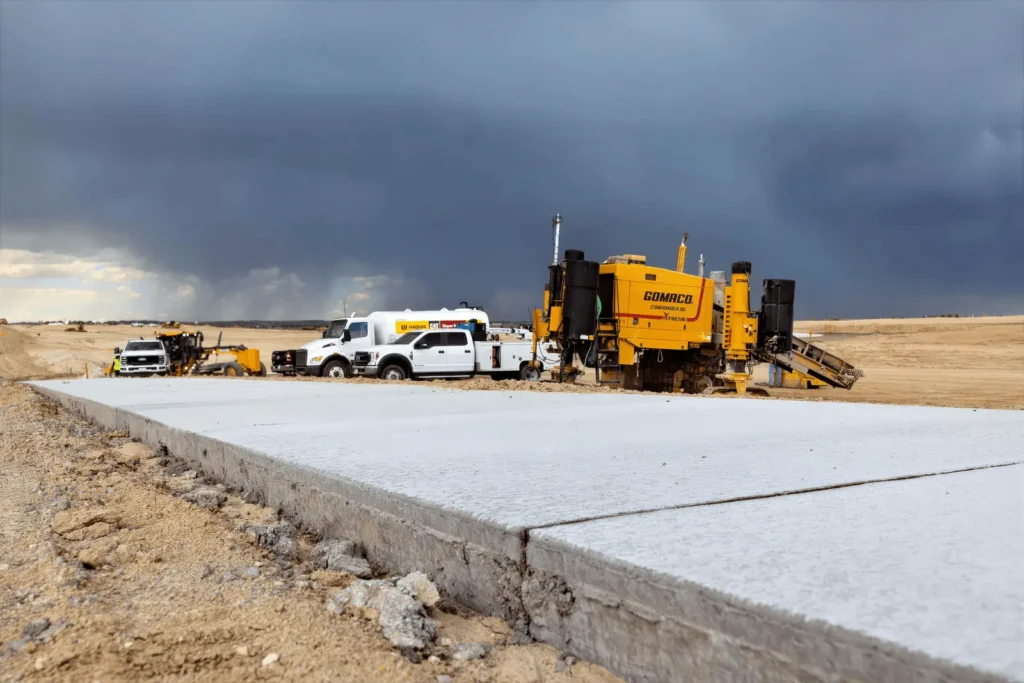
With concrete, precision is far more than a quality metric. It’s a budget and schedule risk that lives in those fractions of an inch. That’s why clients need to know it will be done right the first time—because the cost of getting it wrong compounds quickly, and errors can affect the entire site.
From Stringlines to Satellites
For decades, slipform paving ran on stringlines. Crews set hundreds of stakes along a planned alignment, strung taut line between them to define grade and offset, and ran the paver against that physical reference. It worked then—and, for contractors that still operate this way, it works today. But the process is slow, labor-intensive, and fragile.
A slightly misaligned stake introduces error before the first pour. A line bumped by a piece of equipment or a stake clipped by a truck can throw off the grade without anyone noticing right away. And because the strings and stakes occupy the work zone, every other trade has to move carefully around them, which slows the whole site down.
Stringlines also rely on traditional surveyors to set lines and check alignment—which adds a substantial cost to the project budget, and another dependency to the schedule.
The New Status Quo: GPS-Guided Slipform Paving
In recent years, GPS-guided paving has steadily displaced this slow and error-prone method.
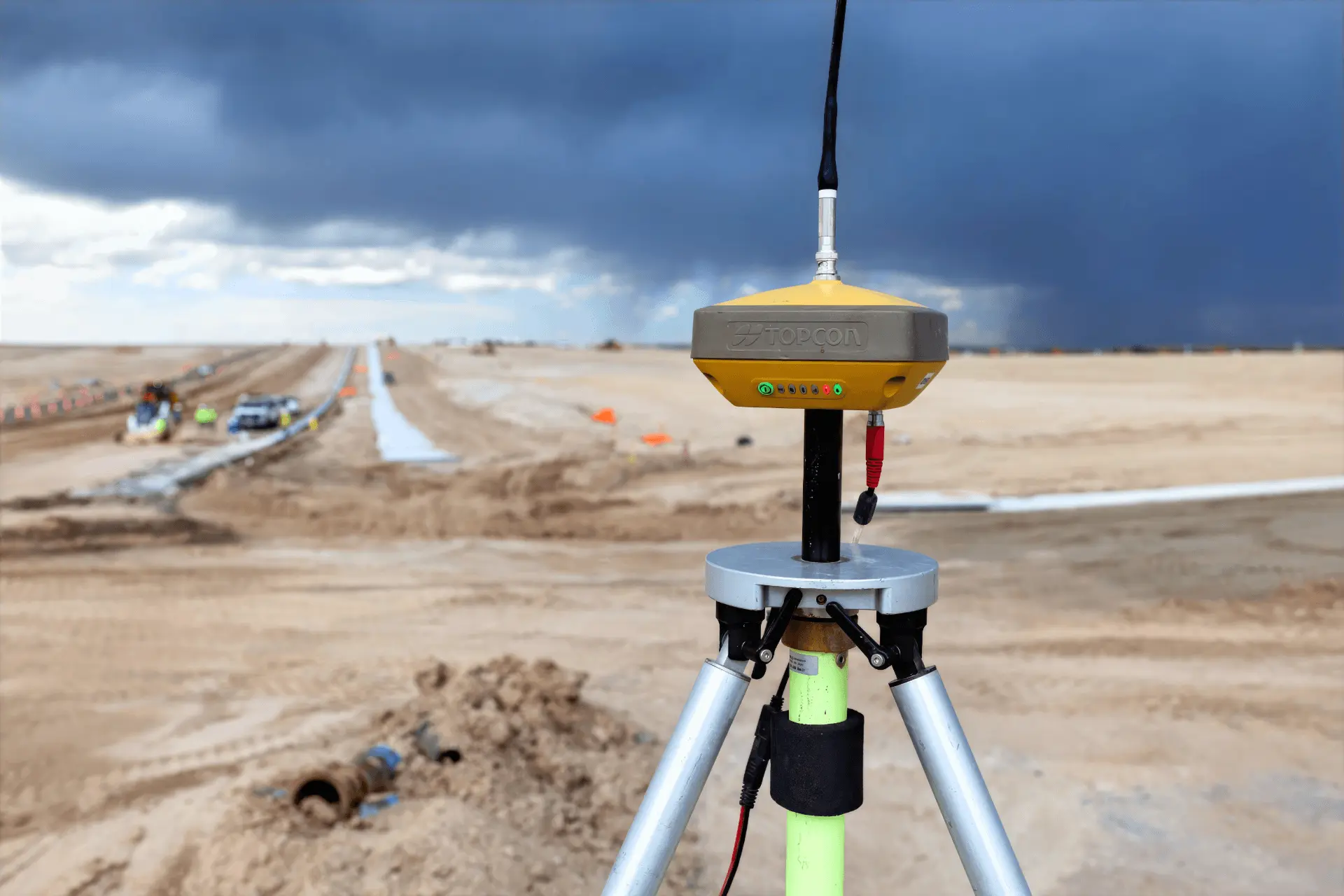
Instead of a physical reference, the paver follows a digital 3D model of the design. An onboard system tracks the machine’s position by satellite, verifies the grade continuously, and automatically adjusts the screed to match the model in real time.
The result? On the whole, this new technology means faster setup, faster pours, lower labor and survey costs, and far less exposure to the bumped-stake errors that stop progress and trigger rework.
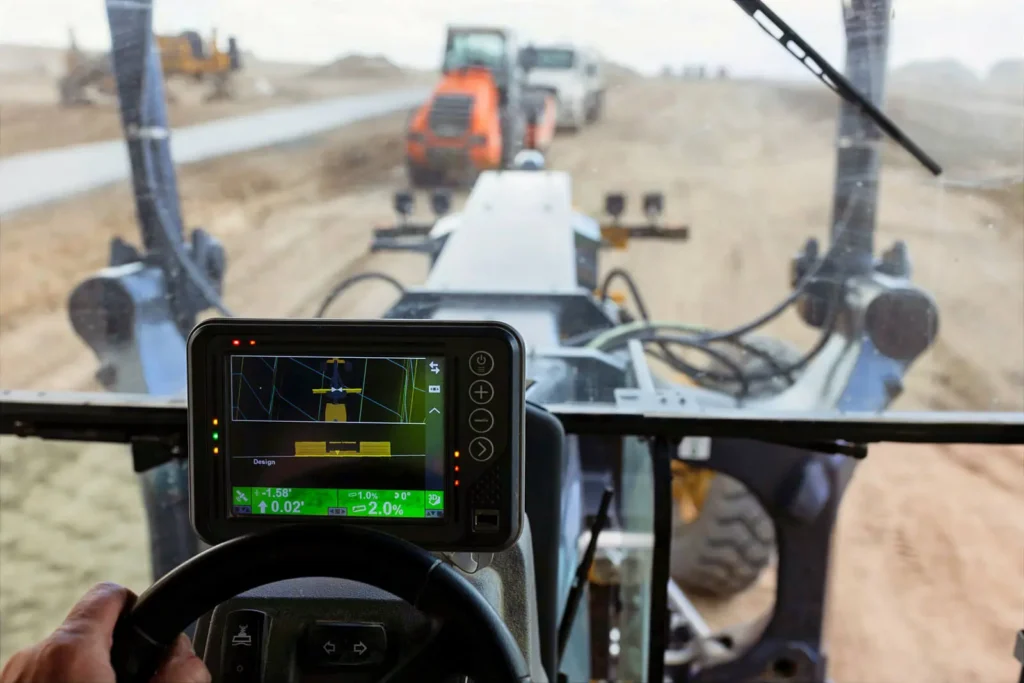
But not all GPS machine control is created equal.
Systems vary in accuracy, range, sensitivity to sightlines, and vertical-versus-horizontal control. To compensate, some operators bolt together systems from different manufacturers, which is expensive to maintain and introduces failure points. And no system is better than the people running it: in untrained or inexperienced hands, even the best tools produce questionable work.
All that is to say, despite the advance in technology, GPS-enabled concrete is still vulnerable to the same quality risks as concrete poured using the traditional stringline method.
The Right Technology, in Experienced Hands
From its start in 2019, Alpine Civil Construction made a deliberate choice to build on the best available technology. That meant standardizing on Topcon’s Millimeter GPS® system, which pairs GNSS positioning with Lazer Zone® laser technology for superior horizontal and vertical machine control.
Most GPS paving systems offer reasonably accurate horizontal control, but struggle with the vertical. This is problematic for concrete, because vertical errors are often the most expensive to remediate—and can easily stay hidden until they show up at inspection.
Millimeter GPS® establishes millimeter-precise horizontal and vertical position, anywhere on the site. This is what allows us to execute complex slipform concrete paving projects with extreme accuracy—and to get it right the first time.
Technology Is Only as Good as the Hands That Run It
But having the right technology is only half of the equation. Alpine crews have years of experience running this system on our slipform pavers, pouring curbs, ramps, tie-ins, and drainage features with satellite-grade precision and in a fraction of the time compared to traditional methods.
Using the Topcon Millimeter GPS system, we were able to pour 10,000 linear feet of sidewalk in three days. If we did it the old way, that would have taken nearly two weeks.
Seth Aberle, Machine Control Specialist, Alpine Civil Construction
Seth Aberle, a machine control specialist at Alpine, recalls a job that called for 10,000 linear feet of five-foot sidewalk. Done conventionally—staking and stringing the entire run, then tearing it all down afterward—he figures it would have taken close to two weeks.
“Using the Topcon Millimeter GPS system, we were able to get it all poured in three days,” Aberle said. “That much of a reduction in time is huge because it opens up the developer’s window for getting permits and so on. We got on board with GPS early and it’s allowed us to really capitalize on it.”
One Integrated Operation
Alpine’s experienced crews run cutting-edge Topcon equipment to deliver higher quality slipform concrete in less time. But the real advantage goes far beyond concrete paving.
Alpine is a full self-perform civil contractor: we run every major scope in-house, and we’ve integrated Millimeter GPS® technology across our entire fleet. In fact, Topcon recognizes Alpine as the most diverse and integrated Topcon contractor in the world, running more than 160 different types of their systems and technology across our operation.
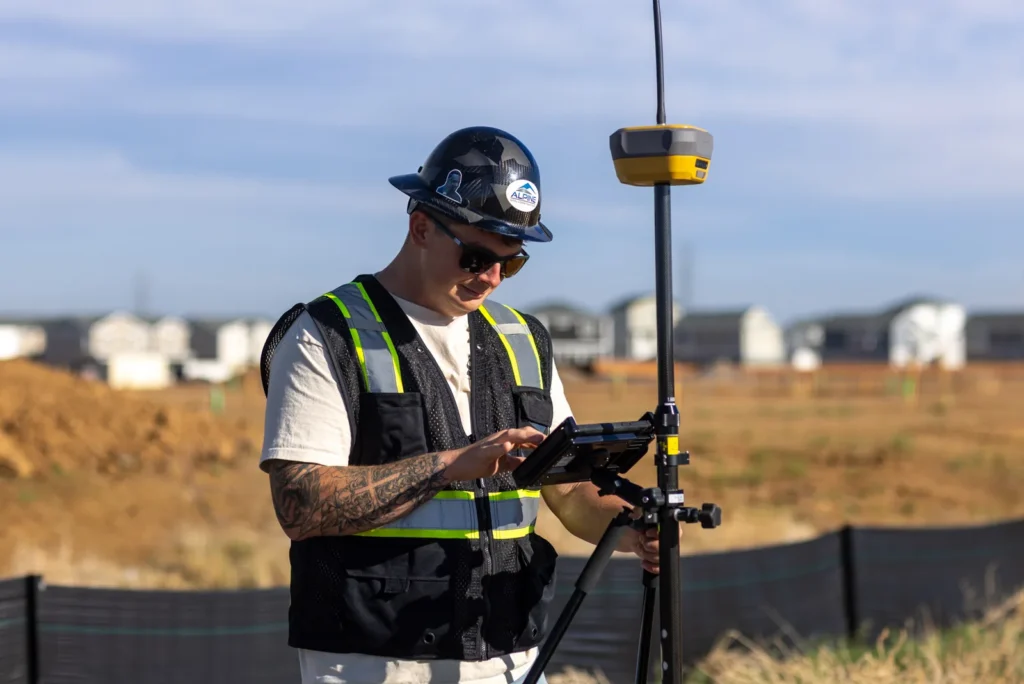
For clients, that integration does several things that a fragmented project can’t:
- No coordination gaps. Every trade is in-house, so there are no handoffs between separate contractors where alignment and accountability fall through the gaps.
- One shared model. All trades work from the same digital 3D model, so earthwork, utilities, concrete, and paving are aligned by design rather than reconciled after the fact.
- Embedded survey. Because Topcon runs across the fleet, survey is built into the work instead of being a separate dependency—saving weeks of schedule and, on large jobs, up to hundreds of thousands of dollars.
The original contract for our work was just under $30 million, with a two-year schedule. We’re going to beat that schedule by about six months.
Alex Morrow, Project Manager, Alpine Civil Construction
The combined effect can be dramatic. Take the Oaks of Castle Rock, a large residential development that was anything but simple: the scope spanned blasting, hauling, road construction, utility installation, and environmental mitigation, all on a steep Front Range site with limited road access and a mandate to preserve as much existing vegetation as possible. Even so, Alpine project manager Alex Morrow reports the job is running well ahead of plan.
“The original contract for our work was just under $30 million, with a two-year schedule,” Morrow said. “We’re going to beat that schedule by about six months.”
Those six months will let the developer move on to vertical construction—and revenue—that much sooner. And it’s the integration that makes it possible.
Right the First Time, Across Every Civil Scope
Alpine pours stringless, GPS-guided slipform concrete better and faster for one reason: experienced crews running best-in-class Topcon technology, with the expertise to get the most out of it. The work is precise, and it’s right the first time.
But the same approach that makes our concrete strong runs through everything we do. Because our concrete services are embedded in a fully self-perform operation—one team, one model, one accountable group of field leaders—those gains aren’t limited to a single scope. They’re the foundation of how we build.
That’s what makes Alpine a true cross-scope civil partner, helping developers and municipalities get better results across the board.
If you’ve got a project on the horizon, reach out to us—let’s talk about what we can build together.